Who We Are

Our intention is to inform people of racist, homophobic, religious extreme hate speech perpetrators across social networking internet sites. And we also aim to be a focal point for people to access information and resources to report such perpetrators to appropriate web sites, governmental departments and law enforcement agencies around the world.

We will also post relevant news worthy items and information on Human rights issues, racism, extremist individuals and groups and far right political parties from around the world although predominantly Britain.

Wednesday, 22 September 2010

The epidemic of hate crimes against the very vulnerable reveals a callousness at the heart of society

David Askew
An impassioned plea from the father of a disabled girl after yet another attacker is given a lenient jail sentence.

David Askew was a kind and trusting man who just wanted to enjoy his life. He smiled a lot, put other people first and, according to his elderly mother, was a true gentleman who never saw bad in anyone.

But for more than a decade, this sweet-natured character had to endure a daily gauntlet of hate as he went about his life in Hattersley, Greater Manchester.

It was like bear-baiting, said one neighbour, as local teenagers screamed abuse, broke windows and harassed Mr Askew for his money and cigarettes. Eventually, one long day in March, it went too far and he collapsed and died, tormented to a lonely death.

This week, one of those teenagers who drove him to his death was convicted on minor charges of harassment and sentenced to just 16 weeks in a young offenders' institution.

The 19-year-old lived just doors away, and had even gone on television to brag about how he was Mr Askew's 'protector'. But it is too easy just to shiver with disgust at this unpleasant youth, then turn the page.

For Mr Askew had learning difficulties. So he was different. He was weak. And now he is dead, the latest statistic in an epidemic of hate crime against the most vulnerable members of our society that should make us all pause for thought.

Every day, people with disabilities are attacked in their homes, spat on in the street and taunted in their towns. And every year, this torrent of abuse, bullying and torture ends with more and more names on the list of those who die in terrible circumstances simply because they are disabled.

Last year, a horrified nation was engulfed in outrage after the death of Fiona Pilkington, who killed herself and her disabled daughter after years of abuse from neighbours.

Politicians, police chiefs and council officials all said 'never again', mouthing platitudes of concern once it emerged that she had complained to the authorities on 33 separate occasions. But little gets done to stop the tide of hatred and hostility.

Was the outrage synthetic or are we just a callous country when it comes to those less fortunate than ourselves, a brutal society with no sense of shame?

This week, a new report offered evidence of 68 violent deaths of disabled people - nearly one-third of them in the first seven months of this year alone - and more than 500 other potential disability hate crimes over the past three years alone.

Anne Novis, the report's author and a wheelchair user, has herself been attacked several times.

In the most recent case she was shopping near her home in Greenwich, South-East London, when a man suddenly rammed his face in hers, screamed that she should have been killed at birth and started beating her.
The details of many of the killings of disabled people in recent years are sickening. The issue was first raised two years ago in a pioneering report called Getting Away With Murder which highlighted how one disabled man was disembowelled and another murdered for a £5 bet.


A woman was urinated on and filmed as she lay dying in a doorway, while a fourth victim was made to wear a dog-collar, treated like a slave for years then forced off a railway viaduct.

And even as the Manchester teenager was sentenced on Monday for his role in Mr Askew's torment, a man was being charged just 30 miles away in Liverpool for the murder of Gary Skelly, a 53-year-old with learning difficulties who died from head injuries.

It is easy to blame a few vile yobs for these crimes. Too easy. Hate crime is merely the most extreme articulation of the prejudice that disabled people face each and every day.

They are the ultimate manifestation of a society that holds no place in its heart for people with disabilities, born out of fear for those who are different and a perverted idea of superiority. One killer even said: 'I'm not going to jail for that muppet,' underlining his disdain for his victim.

Are these attitudes surprising when a survey by the charity Scope found that a majority of Britons believe most people view those with disabilities as inferior?

Given this horrific finding, it is hardly surprising that people with disabilities find it so much harder to get jobs, are more likely to live in poverty and will be paid less and bullied more if they do find work.

Nor is it a shock to learn that nine out of ten people have never had a disabled person in their house for a social occasion and that four out of five people have never worked with someone who is disabled. Well, have you?

The truth is that disabled people are the ignored minority, left behind in the battle against bigotry. Racism and homophobia are, quite rightly, unacceptable these days

But it still seems fine for Barack Obama, the first black U.S. president, to make a bad taste joke about the Special Olympics on a popular talk show, for pop stars and Hollywood pin-ups to call each other 'retards' and for reality television shows like The X Factor to use people with learning difficulties as a prop to build their ratings.


When people with physical disabilities are figures of fun and mental incapacity is a term of abuse, is it any wonder that families turn away from my profoundly disabled daughter when she is out in the park?

And if those with learning difficulties are mocked by celebrities and excluded from society, is it any wonder that some inadequates treat them with fear and hostility? The drip-drip of desensitisation ultimately demeans us all.

These blinkered attitudes are reflected by the authorities when it comes to investigating hate crimes. The problem begins in school, where too many teachers tolerate the use of hateful words in the playground and fail to tackle attacks on disabled pupils.

For example, I've come across a story of a child having their wheelchair tampered with and another, who was epileptic, pushed over deliberately by a group of students who hoped it would give their victim a seizure - which they found amusing. In neither case were complaints taken seriously.

As for those who have been murdered, their abuse normally begins with the kind of petty anti-social behaviour that was so familiar to Mr Askew.

But again and again, the police and local authorities fail to take seriously the minor offences that make life a daily misery for thousands of disabled people, and then the problem spirals out of control.

Indeed, officialdom too regularly behaves like judges in rape trials from days gone by who blamed the victim.

So what happens all too often is that headteachers tell pupils to toughen up, the police frequently shrug off complaints as being a fact of life for those with disabilities, while local authorities often make the victims move home, not their assailants.

The Home Office does not even bother publishing data on hate crimes against the disabled, unlike crimes against some other minorities.

Although one helpline has reported a near-doubling in the number of calls from disabled victims in the past year, there have only been 576 prosecutions over the past two years, compared with 11,264 for racial and religious crimes over the past year alone.

Tellingly, 31 per cent of those prosecuted for disability hate crimes were acquitted, compared with 13 per cent of those accused of other crimes.

And what makes these hate crimes worse is that they are often so-called 'mate' crimes - carried out by supposed friends, neighbours or trusted carers, taking advantage of the victim's vulnerability.

Again this week, a care home manager in Bristol was convicted of stealing nearly £70,000 from two pensioners with severe learning difficulties. The thief was not jailed, of course - the victims were only disabled people, after all.

Daily Mail

EDL march casts shadow on Leicester (UK)

Leicester City Council and city police have told people they can have their say on the demonstration which is scheduled for October 9 through a provided email address.

The extremist EDL which claims to be against “militant Islam” has been slammed by critics who say the league is consistent in resorting to violence and provocative chanting in its marches.

In the latest instance of such rallies, last month some 700 far-right EDL supporters staged a static demonstration in Bradford attacking both security forces and a nearby gathering of Unite Against Fascism (UAF) activists with stone, bottles and other missiles.

Leicester authorities have already started discussions to determine what measures they should put in place to handle an estimated 3,000 EDL fanatics who will descend on the city next month.

Reports say police have made sure at least 1,000 officers, some of them from 10 other forces, are on the streets to provide security to the public during the rally.

Chief executive of the city council Sheila Lock said "to ensure that we capture the views of as many people as possible, we have set up an e-mail address and would encourage people to use it".

She said the council will examine the views emailed to them while holding joint meetings with the senior police officials and community leaders to get help on how to deal with the trouble.

The city council and police have already indicated that they can follow Bradford's example and ask the Home Office for a ban on the EDL march due to threats to public order, though any such restriction will not prevent the right wing group to launch static demonstrations.

Meanwhile, two community groups in Leicester are keeping a close eye on the EDL's upcoming rally.

One of them which calls itself the Muslim Defense League has asked people's help to counter the EDL's march saying the group has been formed to “defend all races and religion” against EDL extremists.

"We are not a group that actively looks to engage the EDL in physical confrontation. If needs be we will defend Muslims and non-Muslims alike" the Muslim Defense League said on its website.

Also the Federation of Muslim Organizations, which is yet to decide whether to stage an anti-EDL rally, said it will “support any counter-demonstrations provided they are peaceful”.

Press Tv

Muslim Council speaks out on need for demo (UK)

The Muslim Council of Britain (MCB) is throwing its weight behind a national demonstration against racism on Saturday 6 November.

The protest has been called by groups including Unite Against Fascism. An MCB spokesperson told Socialist Worker, “Muslims have often been unfairly targeted by newspapers and depicted as alien.

“We regularly receive reports of violent attacks against individuals and Mosques. Islamophobia is not merely an affront to British Muslims but to the very values we stand for in this country. We must stamp out this hatred.”

•Leicester Unite Against Fascism sprung into action last Saturday to build for protests against the racist English Defence League (EDL).

The EDL plans a demo in the city on Saturday 9 October.

“We have been leafleting mosques, churches and football grounds—and getting a great response,” says a UAF activist.

•Liverpool Nazi Nick Griffin was confronted by hundreds of demonstrators when he tried to bring the British National Party’s message of hate to Liverpool last Saturday.

He was forced to beat a hasty retreat.

•Glasgow anti-fascists broke up a British National Party stall in the city centre last Saturday.

Socialist Worker

Tuesday, 21 September 2010

The rise of the far-right in the East

Along with many other prejudices, eastern Germany has had to contend with a reputation for neo-Nazism. It's not entirely unjustified, but right-wing extremism in the East has roots in economic hardship.

Right-wing violence was most dramatic in the first years of the newly unified Germany - and more and more often, they occurred in the former East Germany.

For three consecutive nights in August 1992, several hundred neo-Nazis - watched by up to 2,000 locals - attacked an apartment block for asylum seekers in the north-eastern town of Rostock. With the police unprepared and initially outnumbered, the violence continued unchecked until it culminated in an arson attack.

The Rostock riots quickly achieved international notoriety. Pictures of drunken, violent East Germans doing Hitler salutes were printed around the world. This was not the dawn of a new, hopeful country that had been celebrated less than two years before.

Authority vacuum

Neo-Nazi violence was not just a stain on the former East Germany. Over 100 of the 370 rioters arrested in Rostock had travelled from the former West, where there was a string of horrific attacks on Turkish immigrants in the early nineties.

But Rostock cemented the reputation of post-Wall eastern Germany as a new haven for neo-Nazism, and that reputation stuck. What characterized the Rostock riots as specifically East German was the powerlessness of the authorities.

For two or three years after the fall of the Wall, state institutions in the former German Democratic Republic were weakened by the period of transition. Police officers suddenly found themselves associated with a discredited regime. Dierk Borstel, a researcher into right-wing extremism at the University of Bielefeld, described the precarious circumstances in the early 1990s as linked to a lack of functioning insitutions.

"The police force was destabilized and the church had little influence anyway," Borstel told Deutsche Welle. "The eastern German trade unions and the PDS, the successor party to the former ruling communist SED, had little authority, and the trade unions and industry associations coming in from the West were all very weak in the east."

Worst of many worlds
These semi-anarchic conditions were fertile ground for far-right activists in the former East Germany, and their cause was further helped by the disappointment and poverty that spread in the East after reunification.

"The expectation of East Germans after reunification was: 'We're going to get the security of the East plus the freedoms of the West,'" Borstel says. "The result was that they lost the securities and couldn't afford the freedoms."


Even though the skinhead neo-Nazi scene originated in western Europe, it already existed in East Germany before the fall of the Iron Curtain. It was often linked to certain football teams, and occasionally broke out in extreme violence, such as the attack of 30 skinheads on a concert in a church in central East Berlin in 1987.

The far-right movement in the East capitalized on what many describe as the GDR's denial of its own Nazi history. Olaf Sundermeyer, author of "In the NPD," a book about the development of Germany's populist far-right National Democratic Party, believes the GDR's distanced attitude to Hitler's Germany helped feed the neo-Nazi movement.

"Communist leaders in the GDR said, 'We are an anti-fascist state and we have no responsibility for history. There are no Nazis here.' Of course that wasn't true. There were former Nazis in both East and West Germany, but there was no denazification in East Germany - the Nazi history was not dealt with," he said.

Imbalance and injustice
East German society was never particularly multicultural, and the government's immigration policies showed a determination to keep the population monotone. Immigrant workers from other socialist countries like Mozambique were sent home if they got pregnant, or as soon as their allotted time ran out. The lack of a multicultural foundation is still reflected in eastern German society today.

"Eastern Germany has a lot fewer immigrants - and it has long been acknowledged that where there are no immigrants and no Jews, there is more racism and anti-Semitism," Borstel said.

Neo-Nazis were also able to win over some East Germans with familiar ideas. "National Socialism often starts out with the idea of socialism, and then that is combined with frustration, unemployment, lack of opportunity, and populations moving away." This is the opinion of a former neo-Nazi who wants to remain anonymous, working for Exit Deutschland, an organization that helps people leave the far-right scene.


There is a widespread feeling that the West left the East behind economically. In the last 20 years, unemployment in the former East has been consistently twice as high as in the West, and the emigration of young eastern Germans remains a problem. Statistical evidence shows that German far-right parties tend to prosper in times of economic depression, and the NPD has aimed its electoral resources aggressively at the most neglected districts.

The Exit Deutschland representative, who has counseled numerous former neo-Nazis, said that the frustration that comes from being left behind after watching friends leave your home town is a factor common to many of those who turn to right-wing extremism.

"Those who stay, for whatever reason - because they can't find a job anywhere else, for example - feel an enormous frustration. That is fertile ground for far-right groups - and for extremist groups in general," he said.

Sympathy for the Left
This growing eastern German sympathy with the far-right chimed in with a study completed in 2003, which found that 16 percent of Germans had an extreme right-wing world-view - that is, they expressed chauvinistic, anti-Semitic, social-Darwinist or xenophobic opinions, and tended to trivialize the Nazi regime. In the East, this world-view was found in 23 percent of the population, compared to 14 percent in the West.

This showed a marked change from the early 1990s, when a similar study found far-right-wing opinion more prevalent in the West. Statisticians have linked this switch to a decline in economic expectation. Whereas easterners were more optimistic about their economic prospects in the early 1990s, by the late 1990s, westerners had become more positive about the economy.

Behind this turnaround lay a real sense of betrayal. In a study written in 2005, political scientist Richard Stoess wrote, "That the eastern German people overtook their western compatriots in sympathy for right-wing extremism lay in the fact that their initial trust in the western system of democracy and market economy had turned into particularly bitter disappointment."

Neo-Nazis for the new century
As state authority began to re-assert itself in the East, the far-right developed more subtle ways to organize. "The structures have become smaller," said Borstel. "They no longer rely on large parties like the NPD, but rather local cells, which are more difficult for the state to break up. They have become anchored in local communities in a way I thought would never happen."
This assimilation was mirrored in the far-right political parties, which have spent the past decade making themselves electable in the East. Although the NPD have steadily lost ground in the former West, in the East they have gained a foothold in several state parliaments.


"The Big Bang was the state election of 2004 in Saxony, where the NPD first gained representation in an eastern German state parliament," said Sundermeyer. "Since then it has very gradually established itself as a 'normal' party."

The NPD was re-elected to the Saxony parliament in 2009, with 5.6 percent of the vote. The NPD's membership figures had risen from 4,000 in 1995 to 6,800 in 2009.

The NPD has achieved this success by aiming its messages at young people, especially via the Internet, and appealing to sentiments shared by the far-left - anti-Americanism, anti-Israel, anti-globalization. It has worked to pick up the youth protest vote, targeting sub-cultures with an anti-system stance.

By Ben Knight


dw-world

FINLAND'S FAR-RIGHT SEES HOPE IN SWEDISH VOTE

Finland's anti-immigrant True Finns party sees the rise of a far-right party in neighbouring Sweden as a sign it will also score gains in the next elections, a top party official told AFP Monday. "It appears that it will go just as badly for left-wing parties here," deputy party chairman and member of parliament Pentti Oinonen said. He said his party expects to double or triple the number of parliamentary seats in elections next April, aiming for at least 15 of the 200 seats. Like the far-right, anti-immigrant Swedish Democrats, Finland's True Finns are also campaigning for much tighter immigration policies, although the party rejects what they describe as overtly racist rhetoric in the Swedish party's campaign. Only 2.7 percent of Finland's 5.4 million inhabitants are foreign nationals and the country counts few naturalised foreigners compared to other Nordic countries. Nonetheless, Oinonen said he believed immigration would rise to become a top election topic. "We take in unreasonable numbers of immigrants, their benefits need to be cut, the family reunification policy is flawed, it's all gotten out of control," he said. Socio-economically, The True Finns Party is fairly centre-left, but some of its members have drawn fire for adopting xenophobic, anti-EU and anti-gay rhetoric, despite chairman Timo Soini's efforts to downplay his party's former extremist image. The True Finns' popular support has surged over the past few years, and with opinion polls in August handing it 10.7-percent voter support, it is running in fourth place.


AFP

THOUSANDS PROTEST SWEDEN'S RISING FAR-RIGHT

Thousands of people gathered in a central Stockholm square Monday evening to protest against a far-right party that has been voted into parliament, waving banners and shouting “No to racism!” “It is very important to show that the big majority of the Swedish population is against the right-wing extremists like the Sweden Democrats,” Per Branevig, 33, told AFP, adding that he had voted for the Social Democrats in Sunday’s election. “It has been a big shock for me that they got so many votes,” he said of the far-right party that secured 5.7% of the vote. At around 6:00 pm (1600 GMT) some 6,000 people, some waving banners stating “Yes to togetherness, No to racism” and “No racists in parliament,” gathered in Stockholm’s Sergels Torg, according to a police estimate. The peaceful gathering was spontaneously organized by a 17-year-old girl from the Stockholm suburb of Sollentuna, Felicia Margineanu, who was so disappointed by the election results she posted a protest call on her Facebook page, the Expressen daily reported.

Sweden’s ruling centre-right coalition won the most votes on Sunday but fell short of a majority, as the far right Sweden Democrats nearly doubled their result from the last election and entered parliament for the first time, landing it in a key position in the house. “We don’t like those racists in the Riksdag. Being here shows the government that we care, that we don’t want them [the Sweden Democrats] in parliament,” said 18-year-old Younes Sedik, wearing a black T-shirt with orange lettering stating "I’m a Muslim. Don’t panic!” Standing near banners pointing out that “9,043,222 Swedes did not vote for the Sweden Democrats yesterday,” and that “94.3% of the people are not racists,” 21-year-old Thomas Zebuehr said he was “really unhappy” the far-right passed the four-percent barrier for entering parliament. “I’m not sure what should be done, but something has to be done,” he told AFP. A spontaneous demonstration against the Sweden Democrats also gathered in Sweden’s second largest city Gothenburg Monday evening, with up to 1,000 people participating, the TT news agency reported. Another large demonstration is planned to be held in Stockholm on October 4.

AFP

Court pays for makeup in Pasco neo-Nazi's retrial (USA)

With the retrial of neo-Nazi John Ditullio looming, his court-appointed attorney asked a judge Thursday for  approval of money to defend his client in this hate-crime homicide.


The requested funds included, as they typically do, the costs of traveling to take witness depositions — airfare, hotels, rental cars.

But in this case, the expenses go beyond the typical. Other costs the judge approved are a makeup artist to cover up the tattoos on Ditullio's face, neck and hands each day of the trial; and three life-sized cardboard cutouts to portray the height and build of some key figures in the case.

Cost of the makeup artist: $125 a day for up to three weeks.

Cardboard cutouts: $2,175.

"In our country we appoint attorneys" for poor defendants, said Circuit Judge Thomas McGrady, in approving the use of public funds for other defense costs. "Certainly we should have the same due process whether they're indigent or not."

Pasco authorities say that on March 23, 2006, Ditullio donned a gas mask and broke into a neighbor's New Port Richey home, where he stabbed a woman in the face and neck, then attacked a teenager. Patricia Wells was slashed in the face and hands but recovered. Kristofer King, who was 17, died.

Ditullio was a recruit in a small neo-Nazi clan that outfitted a single-wide mobile home like a heavily guarded compound. Wells told authorities that the neo-Nazis harassed her for weeks before the stabbing. She had a black friend who sometimes visited her home, and her son is gay. Authorities think King might have been mistaken for Wells' son.

Ditullio went to trial last December, but the case ended with a jury deadlocked at 10-2 for acquittal. Ditullio, now 24, was facing the death penalty, as he will again when his retrial begins Sept. 27.

He took the stand in his own defense last year, saying that he spent hours that day doing yard work, then came inside and drank something given to him by the other members that was laced with tranquilizers. Outside, he said, he saw Shawn Plott, another member of the group, carrying a bundled-up sweatshirt and looking like "he had seen a ghost."

When he took the stand, the jury then saw a made-up Ditullio — no sign of his tattoos of barbed wire along his face, no swastika and the words "f--- you" weren't visible on his neck.

A judge then also allowed court money to be spent on the makeup artist, and the trial judge, Circuit Judge Michael Andrews, approved the request.

Bjorn Brunvand, Ditullio's attorney, argued that the tattoos were so offensive that they — instead of the evidence — could sway jurors toward a guilty verdict.

The tattoos "have nothing to do with the facts of the case," Brunvand said last year.

The judge's ruling upset King's mother, Charlene Bricken.

"This is part of who he is. This is what the jury should see," Bricken said before last year's trial. "And if the jury is afraid, they should be."

Petersburg times

Monday, 20 September 2010

Race Rap After Rally (Scotland, UK)

A man has been held by cops after police swooped on a suspected gathering of far-right extremists.

The 39-year-old was arrested for an alleged racial breach of the peace following the operation in Glasgow's George Square on Saturday.

A 14-year-old boy has also been reported.

The swoop is thought to have been sparked by reports of a Scottish Defence League meeting.

The Sun

Anti-Islamic pastor to pay police bill (USA)

The pastor who threatened to burn copies of the Koran on the ninth anniversary of 9/11 has been hit with a bill for more than $180,000 (£115,000) by the city of Gainesville, Florida, for the disruption his stunt caused.

It took local police more than a month to prepare security plans for the community near the church run by Terry Jones, who never ultimately went through with the burning.

Mr Jones, who has a congregation of 50, said that the church had not been informed that it might be billed for the operation. "If we had known this in advance, then we would have refused security," he told CNN.

The Independant

SWEDISH CENTRE-RIGHT WINS VOTE, LOSES MAJORITY

Fredrik Reinfeldt became Sweden's first sitting centre-right prime minister to win re-election, but was deprived of a majority by the first-time entry into parliament of an anti-immigrant party. Analysts had said before Sunday's election that a hung parliament, with Reinfeldt's centre-right Alliance coalition having no overall majority, would unsettle investors and the Swedish crown weakened in early trading on Monday. "An uncertain parliamentary situation is always negative for a currency, but the market pretty quickly goes back to focusing on other things," Handelsbanken analyst Claes Mahlen said. "I don't think the view of Sweden will change dramatically." A preliminary count showed Reinfeldt's coalition winning 172 seats in the 349-member parliament and the anti-immigrant Sweden Democrats 20 seats. The Social Democrat-led centre-left opposition was set to secure 157.

"If this outcome stands we will have a scenario that most Swedish voters wanted to avoid -- that is that we have a xenophobic party holding the balance of power," said Ulf Bjereld, a political scientist at Gothenburg University. Swedish newspapers said the election marked a dramatic shift for a nation known for its tolerance and liberal policies. "It is Monday morning and time for Swedes to find a new self-image," wrote daily Svenska Dagbladet. "A centre-right government without a majority, a wrecked Social Democracy and a party with roots in far-right extremism holding the balance of power." Daily Dagens Nyheter zeroed in on the political difficulties generated by the government falling short of a majority. "Tough situation awaits", ran a banner headline. The Swedish crown slid to about 9.2495 against the euro EURSEK= from 9.2246 at the close of the Swedish market on Friday. It dipped to 7.0761 per dollar SEK= from 7.0653.

Reinfeldt, who campaigned on a promise of more tax cuts and reforms to trim the welfare state, has said he was prepared to lead a minority government but repeated on Sunday he would first approach the opposition Green Party for support. "We have said that the biggest bloc should rule and that is the Alliance," he told supporters at an election night party, rejecting any cooperation with the far-right Sweden Democrats. But the reception from the Green Party was cool. "In the current situation we have continued red-green cooperation," said joint Green Party leader Maria Wetterstrand, referring to the alliance with the opposition Social Democrats. Reinfeldt benefited from one of Europe's strongest economic recoveries to become the first sitting centre-right prime minister to win re-election in a country that was ruled for much of the last century by the Social Democrats. In the election, voters were choosing between Reinfeldt's model of a leaner welfare state with more income tax cuts and privatisations, and an opposition platform that wanted the rich to pay more to fund schools, hospitals and care for the elderly. The Social Democrats had their worst election in almost 100 years, with voters apparently backing the welfare reforms and tax cuts pushed through by the Alliance of Reinfeldt's Moderate Party, the Liberals, Centre and Christian Democrats.

Far-right success
The big news of the night was the entry into parliament of the anti-immigrant Sweden Democrats. The rise in support for the far-right party has come after it moved away from its skinhead roots and mirrors increases in backing for similar parties elsewhere in Europe. The Sweden Democrats deny they are racist but both main blocs have ruled out working with them. "Today we have written political history together, I think that's fantastic," Sweden Democrat leaderJimmie Akesson told chanting supporters. Analysts say the party has found support among the unemployed, whose numbers have risen during the global economic crisis. It has a strong base in the south of Sweden, where the number of immigrants is higher than the national average. Umea University expert Svante Ersson said Sweden Democrat voters were often young men who felt ignored by society. "They don't necessarily have to be xenophobic -- it could be a way to make a statement against the establishment," said Ersson.

The Sweden Democrats have been inspired by the success of the People's Party in neighbouring Denmark that provides vital parliamentary support for the government there. The party wants to curtail immigration and criticises Muslims and Islam as un-Swedish. Immigrants account for 14 percent of Sweden's population, just above the 12.4 percent average for northern Europe, according to United Nations figures. Jan Haggstrom, chief economist at Handelsbanken, said that even a minority Reinfeldt government could manage well and he saw little chance that the centre-left opposition would link up with the Sweden Democrats on key parliamentary issues. "We have such strong public finances. It would take something really spectacular for people to start worrying ... and start selling Swedish government paper," he said. Sweden has been among the most welcoming of European Union countries to immigrants seeking asylum or refugee status, taking in people after the Balkan wars of the 1990s and becoming a favourite destination for Iraqis after the U.S. invasion.

Reuters

Increase in Dutch antisemitism

The Dutch Jewish community suffered almost double the number of antisemitic incidents in 2009 than in 2008. Experts said this increase might only be “the tip of the iceberg”.

Police said the 209 cases of antisemitism were documented in the Netherlands last year, representing a 48 per cent rise year-on-year and accounting for nearly a tenth of all discriminatory incidents in the Netherlands.

During Israel’s Gaza offensive in January 2009, 98 attacks were documented, including nine physical assaults.

Other incidents in 2009 included vandals damaging synagogues and spraying graffiti on Jewish monuments.

The Jewish community in the Netherlands numbers around 30,000, less than 0.3 per cent of the country’s population.

Earlier this week the Dutch Foreign Ministry withdrew an invitation to the leaders of Israeli council because some of those involved were representatives of West Bank settlements.

In June police in Amsterdam outlined proposals to post “decoy Jews” – police disguised in Orthodox clothing – around the city in order to catch potential racist attackers.

The Jewish Chronicle

EUROPEAN ROMA RIGHTS GROUPS THREATEN TO TAKE FRANCE TO COURT

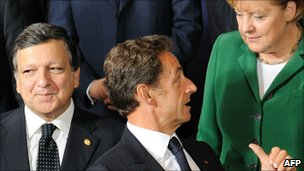
Roma groups protested at France's expulsion policy and threatened to take Paris to the European court Saturday, as another top EU official took aim at President Nicolas Sarkozy. In Bulgaria, a dozen Roma organisations delivered a joint letter, addressed to Sarkozy, to the French embassy in Sofia. "The people you are throwing out have not committed any crime: if that was the case, they would have been arrested and charged," they wrote. Some 150 Roma chanted "Europe is with us" and carried banners saying, "Sarkozy is legalising racism," "Poor doesn't mean criminal, No to deportation" and "Liberty, equality, fraternity", referring to the French national motto. On Thursday, Sarkozy vowed to continue dismantling illegal Gypsy and traveller camps in France despite a barrage of criticism and reported clashes with European Commission chief Jose Manuel Barroso at a heated EU summit in Brussels. In Spain Saturday the local wing of Union Romani, an international Prague-based Roma rights organisation, vowed to take France to the European Court of Justice (ECJ) in Luxembourg. "We express our sorrow and our deception because European leaders at the summit did not have the necessary courage to put the French president in his place," the group said in a statement. It condemned the French interior ministry's August 5 leaked memo -- which revealed that Roma were being targeted for expulsion -- as "a racist, anti-constitutional, anti-European, inhuman measure with clear Nazi connotations." The group said the ECJ's 27 judges "will decide a verdict which, we do not doubt, will make an example of and will condemn the French government."

The summit came two days after the EU's top justice official Viviane Reding, angered by the leaked memo which apppeared to contradict Paris's assurances, called the expulsions a "disgrace" and threatened legal action. "This is a situation I had thought Europe would not have to witness again after the Second World War," she said, in turn arousing Sarkozy's ire. EU Social Affairs Commissioner Laszlo Andor hit out at the French leader again in an interview to be published Monday. "People are trying here cheaply and obviously to boost their popularity at the expense of a particularly vulnerable group," Andor told the Austrian weekly Profil. However he conceded Sarkozy's case that EU members in general had done too little for the minority group, and said the bloc will hold a conference in the Romanian capital Bucharest next month to discuss aid initiatives for Roma. The meeting aims to address the EU's existing "comprehensive support programme" for Roma and gypsies and encourage member states like Romania and Bulgaria to benefit from these subsidies, he said. Meanwhile, a French opinion poll found 71 percent of respondents believed that France's international image had been tarnished after the dismantling of Roma gypsy camps and expulsions to Romania and Bulgaria, on top of the French football team's exit from the World Cup in disgrace.

AFP

Aberdeen anti-Traveller website branded racist (UK)

A website set up by angry critics of Travellers in Aberdeen was today slammed by a human rights group for using racist language.

The Equality and Human Rights Commission has reported a page on a social networking site to MSPs, claiming offensive comments about Aberdeen Travellers have been made.

The website – Stop Travellers Wrecking Aberdeen – was set up by Brian Falconer in reaction to a number of camps across Aberdeen – and 20 people have joined the group

Evening Express

Jailed, the racist thug who launched brutal attack over a cigarette (UK)

A thug who beat a man who refused to give him a cigarette has been jailed.

Ian Shore, 22, repeatedly punched Huran Yalvac – minutes after his cousin Karl Martin racially abused the Turkish victim.

Shore, of Milnrow Road, Rochdale, is already serving a 20-week jail term after skipping bail following the incident.

He was ordered, at Manchester Crown court, to spend an additional ten months behind bars after admitting racially aggravated assault causing actual bodily harm.

Martin, 21, of York Street, Rochdale, admitted racially aggravated harassment for his part in the incident.

He was given a six-month jail sentence, suspended for 18 months, plus 100 hours of unpaid work. He must also pay £350 costs.

Bob Sastry, prosecuting, said Mr Yalvac had been on Drake Street, in the centre of Rochdale, at 1am on July 12, when he was approached by Martin and Shore.

After Shore barged into the victim, he and Martin demanded a cigarette. When the victim said he could not give him one, Martin said: "We’ll smash your face in if you don’t." Martin then swore at Mr Yalvac, subjecting him to racial abuse, before Shore punched him – continuing the attack after his victim fell to the ground.

Mr Yalvac was left badly bruised and the men were arrested at the scene.

Hiranya Narayan, defending Shore, said: "I am not intending to submit drink as an excuse, it is not – it is an explanation.

"He unusually was in drink that day. He has not abused alcohol since."

John Marsh, defending Martin, who has a previous conviction for racially abusing an Asian man, said he was also drunk after the pub crawl with Shore.

Mr Marsh said Martin’s background should influence him not to be racist – he had worked in Ghana and had a number of African friends.

Mr Marsh said: "He is very ashamed of his behaviour."

Sentencing the pair, Judge Andrew Blake said: "You both took part in what was a very unpleasant incident, it occurred because you were both drunk and you decided, for reasons best known to yourselves, to approach this man who you obviously thought was Asian.

"The request for a cigarette was simply an excuse to cause trouble."

Manchester Evening News

Yobs plaguing alleyway with noise and racist abuse (UK)

Racist yobs who have terrorised a neighbourhood for two years may be shut out of a Shipley alleyway under a £5,000 Council scheme.

Fed-up residents of Livingstone Close, Wrose, have had to endure abuse from gangs of up to 40 youths roaming the streets every night.

The residents have reported the thugs, who they say are mainly from the Swain House area of Bradford, carrying metal bars, baseball bats, sticks and even an air rifle.

One resident, who did not wish to be named, told the Telegraph & Argus he had been racially abused and another has been assaulted by the gang ‘ringleader’.

The youths have been drinking under age, urinating in gardens and throwing litter, stones and, during the winter, snowballs at homes.

Now Bradford Council is set to close the alleyway by putting up locked gates between Kings Road and Livingstone Close, in a bid to drive away the young trouble-makers.

The scheme will cost £5,000 in total, a meeting of the Shipley Area Committee heard.

Sergeant Khalid Khan, of Shipley Neighbourhood Police, told members the yobs used the ginnel to reach Claremont Fields, off Kings Drive.

He said: “We have had reports of 30 to 40 of them coming down and causing problems, not just for the residents of Livingstone Close but in Kings Drive, which is predominantly elderly residents.

“We have spoken to them but they have been absolutely petrified to even report incidents.”

Sgt Khan said police patrols were spending more than two thirds of each night guarding the area, which has seen “large-scale fights” during the past two years.

Increasing patrols has had a “profound impact” on anti-social behaviour elsewhere, said Sgt Khan. “It is having an impact not only on the residents but on our resources as well,” he said.

Danny Jackson, Bradford Council’s rights of way officer, said the Council could permanently close the alleyway but had decided against the move because it was also used legitimately as a right of way.

Security gates blocking off the alleyway could only be put in place if it could be shown that the path was a serious crime hot spot.

He told the meeting of the committee: “It does not seem to meet the criteria. We need to show high levels of serious crime are directly related to the path.”

Councillor Vanda Greenwood (Lab, Windhill and Wrose) said: “I beg to differ. There are some very, very serious issues, particularly racist problems.”

Members of the committee voted in favour of putting in lockable gates at each end of the alleyway subject to finding funding for the scheme.


Telegraph and Argus

Swastika race thugs target Burnley shop (UK)

Racist thugs targeted an elderly woman by spraying a swastika on her shop and torching a car.

But 77-year-old widow Sakina Bili Ali, who runs Warsi Foodstore off-licence, in Leyland Road, Burnley, said she would not be forced out of her home or shop.

Shocked neighbours have expressed their disgust at the attack and describe the victim as 'an absolutely lovely neighbour'.

Mrs Ali's son's car, which was parked outside the shop, was torched at 4.45am on Saturday.

A swastika was sprayed on the shop wall in de-icer, along with the initials J.B.

Police believe the person responsible may have unsuccessfully tried to set the symbol alight.

Mrs Ali, who has worked at the shop for 30 years and lives in the upstairs flat, said: “I’m upset by what has happened.

“But I can forget about the spray now it has vanished. I’m not scared by it.

"I have been here a long time and nothing has ever happened before.

“I don’t understand why it has happened. It is a close neighbourhood here and everyone that comes in is friendly and I’ve had no trouble with anyone.

“But If they come back then maybe it is just my time. I’m not scared of death.”

She said that she was asleep when the incident took place and had not heard anything until police and fire arrived.

Mrs Ali said: "My daughter came banging on the door saying the car had been set on fire.

“I’ve asked all the neighbours but nobody seems to have heard or seen anything out of the ordinary.”

The rear doors of the car have been badly burned in the attack and police said there was extensive damage to the vehicle's interior.

Neighbours said they had been left disgusted.

Mother-of-four, Natalie King who lives across from the shop, moved from Manchester only a year ago to be nearer to the countryside.

She said that the incident has made her consider moving house.

Natalie said: “She is quiet but lovely and everyone get on with her.

“It has really upset my children and made them frightened.

“I thought that we were moving to a family area but there is just trouble here.

"After this weekend I think we will be looking to move house.”

Neighbour Kurt Stephens said: “I come to the shop every day.

"She is an absolutely lovely neighbour. I hope they catch whoever did this.”

Colin Smith, who lives opposite to the shop, said he had found the family 'really nice and helpful' in his short time living in the area.

He said: "I’m surprised that it seems to be a racist attack.

"I know it isn’t the best area of Burnley but people seem to get on quite well.”

Police are appealing for witnesses to the incident and urging anyone that may know anything to get in touch.

Detective Sergeant Chris Scott from Burnley CID said: "This is a frightening incident and obviously upsetting for the family.

“We are exploring every avenue but at the moment there seems to be a racist motive."

Call police on 01282 425001 with information

Burnley Citizen

20 graves vandalised in second racist attack on Leeds cemetery (UK)

Vandals have struck at a Leeds cemetry for the second time in an attack police believe to be racially motivated.

In the latest incident, more than 20 graves were damaged at Harehills Cemetery.

The incidents are believed to have taken place overnight between Friday and Saturday in an area of the cemetery predominantly used by Muslim families.

The damage includes broken name plaques and headstones.

Chief Inspector Melanie Jones of West Yorkshire Police said: "This incident has caused a great deal of distress to a number of people in the local community and an investigation into the damage has been launched.

"Over the weekend we have worked alongside community leaders to identify and contact the next of kin of those whose graves have been affected by this mindless act of vandalism.

"We have also undertaken a full forensic examination of the scene, including a number of discarded items that were found in the area, as well as analysing local CCTV.

"At this stage the incident is being treated as a racially motivated crime and we are determined to catch those responsible.

"I would ask that anybody who was in the area of the cemetery on Friday evening and witnessed anything suspicious to contact us.

"This incident undermines much of the work both ourselves and Leeds City Council have undertaken during the last year to improve security at the cemetery with increased patrols by neighbourhood wardens and police officers.

"I would like to reassure local people that everything is being done to find those responsible and bring them to justice."

Similar incidents were recorded in March and though an arrest had been made, police were unable to bring a prosecution.

Anyone with information is asked to contact 0845 6060606 or Crimestoppers anonymously on 0800 555 111

Yorkshire Post

Sunday, 19 September 2010

Hacker attack wreaks havoc on Sweden Democrat website

The website of the far-right Sweden Democrats was hacked on Saturday, one day before the party is expected to be voted into the Riksdag in Sweden’s September 19th general elections.

"We have had hacker attacks over the past 24 hours. We have no idea where it is coming from," Sweden Democrats spokesman Erik Almqvist told AFP, adding that the party expected to get its website running again soon.

When AFP viewed the site early Saturday afternoon, only a digitalised picture made up of numerals to look like a piece of birthday cake with a lit candle was visible.

Below the picture, a short text read: "Anyway, this cake is great. It's so delicious and moist. Look at me still talking when there's Science to do," as Ellen McLain's "Still Alive" played in the background.

"I think it is a shame. Our political opponents should take the debate with us if they disagree with us," Almqvist said, insisting the attack "doesn't do any good for democracy."

The hacker attack came on the eve of general elections, with polls hinting the Sweden Democrats for the first time will win more than the four percent needed to enter parliament.

The far-right party, which won just 2.9 percent of the vote in the 2006 elections, has been seen winning as much as 7.5 percent on Sunday, although three polls published Saturday handed it between 3.8 and 5.9 percent of voter intentions.

The surveys meanwhile showed the centre-right government's lead over the left-wing opposition shrinking slightly but still winning a narrow majority in parliament.

If neither side wins a clear majority, however, the Sweden Democrats could, even with just a handful of seats, play kingmaker and could even make it so difficult to govern that new elections would need to be called, observers say.

The Local Sweden

BNP leader Nick Griffin in surprise visit to Liverpool met with anger

British National Party leader Nick Griffin’s surprise appearance in Liverpool today sparked protests from anti-fascist demonstrators.

The leader of the far-right party was in Church Street with other members calling for British troops to be brought home from Iraq and Afghanistan when they were confronted by members of the Merseyside Unite Against Fascism group.

Mr Griffin, elected to the European Parliament as a North West MEP last year, scarpered as the number of protectors swelled to more than 100, while around 20 police officers stood between the rival groups.

The protestors chanted anti-Nazi slogans through megaphones while the BNP manned their stalls and tried to shout over the chants coming from the impromptu demonstration.

Alan Brown, regional co-ordinator for Merseyside Unite Against Fascism, said there had been no forewarning that Mr Griffin would be in town. It is not known if his appearance was meant to coincide with the Liberal Democrat conference being held at the Echo Arena.

Mr Brown said: “Nick Griffin thinks that because he was elected by two pet cent of the electorate that he can come here and spread his message of hate, but I think you can see from the amount of people on the demo that we don’t want him in our city and he does not represent people in the North West.”

Demonstrators of all ages and backgrounds chanted “BNP off our streets! Nazi scum off our streets!” as the extremist party’s members tried in vain to give out their propaganda in the pouring rain.

Liverpool Echo

Stop The War blasts BNP for hijacking ‘troops out’ campaign

The British National Party has been accused of trying to hijack the anti-war movement as it launched a nationwide campaign yesterday calling for British troops to be bought home from Afghanistan.

Teams of far-right activists hit towns across Britain on Saturday for the launch of the BNP’s Bring Our Boys Home campaign.

The BNP believes it can establish itself as the voice of British military veterans. In Scotland, the party claims most of its Scottish leadership and a quarter of its supporters are ex-servicemen.

The Royal British Legion has described the BNP move as horrifying and insisted none of its members supported the far-right party.

Anti-war groups accused the BNP of opportunism and said it was trying to hijack a peaceful campaign.

BNP members will spend the next three weekends canvassing support in Scotland. Activists began yesterday with groups targeting Edinburgh, Falkirk, Livingston, Elgin and Dundee. There was also brief protest in Glasgow.


In a letter to party members, leader Nick Griffin wrote: “This campaign will help establish the BNP as the only political party that is opposed to the bloody, unwinnable, futile and illegal war in Afghanistan. This war has only produced a constant stream of British deaths and has nothing whatsoever to do with Britain.”

Letters purportedly written by Falkland veterans have also been distributed online, but Neil Griffiths, spokesman for the Royal British Legion Scotland, said few veterans if any would be swayed by the extremist party.

“Our members would be horrified by this,” he said. “I can’t think of one of our 46,000 Scottish members who would ever take the BNP seriously. I have never heard of anyone supporting the BNP or advocating it.”

He said the party’s claim that its boasted support among soldiers was “clap-trap”.

He added: “During the election, Nick Griffin was followed everywhere by a guy wearing desert fatigues who had never been in the army … They have also tried to make donations to ex-service charities in England which have always been rebuffed. If they tried to do that in Scotland, the same would happen.”

As well as the BNP, the English and Scottish Defence Leagues have also tried to court the armed forces with planned marches on the cenotaph in Glasgow.

The leader of Britain’s largest anti-war movement said he had never seen the BNP previously involved in any protest against the Afghanistan or Iraq wars.

Chris Nineham, founder of Stop The War, said: “Some 70% of the British population want an end to the war in Afghanistan – there is a huge groundswell of anti-war opinion. The idea the BNP represents that is an utter joke.”

He added: “We have seen probably every political party except the BNP on protests.”

Gary Raikes, the BNP’s Scottish leader, hopes targeting veterans will help bolster the party north of the border, where its support is slight.

He said: “We want to tell the public we are the only party still standing on bringing the troops home. We have been against it from the start. Servicemen are not daft, they have seen the world and see through all the lies about us and know we have changed as a party.”

Raikes admitted that the party had used anti-war petitions to gather names and addresses for future political campaigning.

Herald Scotland

Swastika Carving On Far-Right Pol Was Self-Inflicted: Police

A far-right Swedish politician is questioning the political timing of a police report that concludes an attack that  left a swastika carved into his forehead was self-inflicted.

“I find it very interesting that the police chose to give this certificate just before the election,” Swedish Democrat politician David von Arnold Antoni told Sydsvenskan. “There are certainly those who can benefit from it in the election.”

As previously reported, Antoni claims he was savagely attacked by two masked men on the evening of Friday, September 10. After the men forced themselves into his apartment, one held Antoni down while the other carved a swastika into his forehead.

Antoni said the men spoke Swedish accented in Arabic and called him “Svenne bastard” and “Swedish devil” during the attack, Sydsvenskan reports. Anti-racist and radical leftist graffiti was spray-painted onto Antoni’s home earlier that day.

After investigating the attack as a hate crime, police have concluded Antoni made the whole thing up and are contemplating charging him with filing a false report.

“This is a bitch, not only that resources he cost, but what he has done can’t be more shameful,” an officer with high levels of transparency in the investigation told Sydsvenskan.

Doctors who examined Antoni also have concluded his injuries are fake on a 9-out-of-10 scale. The certificate issued by the Office of Forensic in Lund, says, “Strong reasons concerning the location and appearance suggest that is self-inflicted injury.”

Antoni remained steadfast on his claim he was attacked after hearing the forensics reports.

“The Right Doctor’s certificate is not truthful,” he told Aftonbladet. “I do not accept his assessment.”

“What I said in my declaration is true. I was attacked by two men who carved a swastika in my forehead.”

The news comes as Sweden is set to vote in national elections. With neither of the two major coalitions able to break past a 50-percent majority in opinion polls, the Swedish Democrats are set to become kingmakers in the next parliament. Leader from both major coalitions have vowed to not work with the far-right nationalist group.

The Swedish Democrats had seen an increase in support after news of the swastika-carving broke. It is not yet known how the police and forensics reports will affect their standing.

Antoni, who is standing for the Swedish Democrats in local races in Malmo, has gone into hiding since the attack took place and has not been photographed. He refused to show his injuries to a reporter with Aftonbladet when asked.
If true, the case echoes that of Ashley Todd, a volunteer of the US Presidential campaign of Republican John McCain, who claimed she was assaulted and had the letter “B” carved into her face by an African-American supporter of Democrat Barack Obama. The attack was later proven to be self-inflicted by Todd, who may have been part of a discrediting campaign by the Internet group Anonymous.

The Right Perspective

Pilot could be fired over racist remark (South Africa)

A senior SAA captain is facing dismissal after using a racist remark while dealing with a ground technician.

The highly experienced pilot was sitting in the cockpit of the aircraft when he used the k-word over the interphone system with the ground, which, unbeknown to him, was live.

The ground technician, who was in communication with the flight deck, heard the remark.

SAA's head of corporate communications, Fani Zulu, confirmed yesterday that the incident had occurred in June and that a hearing had been held.

"The process is nearing completion and a decision will be taken in the next few days. Meanwhile, the pilot, who was grounded, was on full pay, which was stopped on Friday," said Zulu.

Captain John Harty, chairman of the SAA Pilots' Association (Saapa), said yesterday that although it did not condone racist remarks and that sanction was justified, it was felt that, under the circumstances, the recommendation of dismissal was too harsh.

"The captain had been flying for more than 16 hours and had had technical problems in Accra prior to departure," said Harty. "After arriving at OR Tambo Airport following a long night flight, the crew were waiting for a ground power unit to be attached to the aircraft before shutting down its power systems. Problems were experienced by ground engineers, which delayed the shutdown and offloading of passengers."

Harty said that, in his frustration, the captain, who has been with the airline for 23 years, made the remark. He immediately apologised to the engineer and later went to the management offices where he admitted the remark.

At the disciplinary hearing three weeks ago, he apologised to the technician and the men shook hands.

Nevertheless, the presiding officer recommended dismissal.

Harty said the technician was a member of the SA Transport and Applied Workers' Union, which had agreed to send a letter to SAAPA, as a joint appeal to management, against what was viewed as an overly harsh decision.

Harty said SAAPA would appeal to the CEO for clemency for the pilot. "We are also addressing numerous procedural irregularities which occurred concerning the hearing."

He added that, with over 800 pilots at SAA, this was the first incident of its kind in 16 years, which indicated that racism was not endemic in the airline.

Times Live

Lokomotiv Moscow fans let off the hook over Peter Odemwingie racist banner

The Russian Football Union have refused to take any official action against Moscow Lokomotiv for their fans' behaviour towards West Brom striker Peter Odemwingie.

The club's supporters earned worldwide condemnation after they unfurled a sign showing a banana and the message 'Thanks, West Brom' when the Nigerian joined the Premier League club last month.

But the country's disciplinary committee did not even consider the matter, with chairman Vladimir Katkov insisting: 'My opinion on this is that we should not exaggerate the incident.'


Daily Mail

Scotland’s shame: Amnesty hits out at Roma racism

Human rights organisation Amnesty International yesterday condemned the racism that the travelling community suffers on a daily basis throughout Scotland.

The condemnation comes as the “gypsy” community in mainland Europe battles increasing levels of discrimination and after EU Justice Commissioner Viviane Reding compared France’s expulsion of the Roma people to the Nazis’ deportation of the Jews.

In Pitlochry yesterday travellers staged a cultural summit celebrating their traditions and calling for action by the Scottish Government to curb the racism they suffer north of the Border.

Members of the travelling community told the Sunday Herald that Scottish society still refused to tolerate their lifestyle, amid continued attempts to force them into the mainstream. The community said there could be as many as 15,000 travellers in Scotland – including some Roma. The issue has been taken up by Amnesty International Scotland.

Amnesty researched each of Scotland’s 32 local authorities’ performance on delivering basic services and wrote to the councils challenging their record and highlighting areas where there could be improvement. John Watson, programme director for Amnesty International Scotland, said: “One of our focal points during next year’s elections for the Scottish Parliament will be to ask the Scottish Government to publish an action plan to tackle discrimination.”

Yesterday’s event at Moulin Kirk in Pitlochry was organised by Jess Smith, a storyteller and author who has written five books about Scotland’s travellers. Smith, who describes herself as a tinker, said the event was designed to raise the issue of prejudice and to celebrate the travelling community’s heritage.

“We’ve never been accepted,” she said. “As a kid I was battered senseless simply because I was different. Our people have always been viewed as a thorn in the side of authority, and society does not accept us because we’re free spirits – like the white wolf.

“We’re part of Scotland’s heritage but that’s under threat through attempts to filter us into mainstream society by making our lifestyle difficult to maintain.”

Shamus McPhee, a 39-year-old linguist who grew up in Bobbin Mill, Pitlochry, would agree. Bobbin Mill is the site of a controversial social experiment to assimilate gypsies into society. McPhee regards himself as part of a distinct ethnic group who speak a language called Cant, containing Sanskrit and Hindu words.

His sister Roseanna, a Gaelic teacher, had recently visited Roma camps in Kosovo and said she found conditions there were similar to Bobbin Mill. Her brother recently began a petition urging the Scottish Government to apologise to his community for decades of discrimination.

He contacted many lawyers in Scotland to represent them in a human rights case based on their childhoods spent “as part of a racial experiment”.

“But no-one would take us,” he said. “We’ve now taken our complaint to Strasbourg and it has passed the first stage. Witnessing what is happening to the Roma in Europe is disturbing and I’ve noticed attitudes hardening recently here in the UK.”

The Bobbin Mill experiment
The Bobbin Mill Tinker Housing Experiment was set up in 1947 by the Department of Health, giving land to gypsies for 99 years.

The site was to be maintained by Perth and Kinross Council, which was to charge rent. The Department of Health said huts should be built to the lowest possible tender (£825) and normal standards need not apply.

The idea was to house people temporarily, get the children into school and their parents into council houses. More than 60 years on, however, the McPhee family is still living there without modern amenities.

Herald Scotland

Saturday, 18 September 2010

Sub-Sahara Africa leads global decline in new HIV cases

Countries in Sub-Saharan Africa are leading a global decline in new HIV infections, the UN has said.

UNAids said 22 countries in the world's worst affected region had seen a drop in new cases of more than 25%.
The fall was because of greater awareness and better use of preventative measures, it said.

But UNAids also noted that cases of HIV were increasing in Eastern Europe and Central Asia, and among gay men in developed countries.

Michel Sidibe, UNAids executive director, said the world was making "real progress" towards achieving the sixth Millennium Development Goal (MDG6) of halting and reversing the spread of HIV/Aids by 2015.

"For the first time change is happening at the heart of the epidemic. In places where HIV was stealing away dreams, we now have hope," he said.

UNAids says there are now 5.2 million people worldwide receiving treatment for HIV/Aids, which has helped to ensure that 200,000 fewer people died from the virus in 2008 than in 2004.

The agency said young people "are leading the prevention revolution by choosing to have sex later, having fewer multiple partners and using condoms, resulting in significantly fewer new HIV infections in many countries highly affected by Aids".

The use of male condoms has also doubled in the past five years, while the report notes that "tradition is giving space to pragmatism" in many communities as they embrace male circumcision, which research shows has the potential to reduce HIV infections among men by nearly 60%.

'Challenges remain'
China, where cases are largely concentrated within high-risk groups, was praised for its efforts to increase preventative measures for drug users.

UNAids said South Africa had also rapidly increased "efforts to achieve universal access to HIV prevention, treatment, care and support".
But there was a warning that "challenges remain" in the global fight against HIV/Aids, including expanding epidemics in Eastern Europe and Central Asia, and resurgence in new infections in wealthier nations among men who have sex with men.

The UN also called for greater investment in HIV/Aids prevention, warning that there was a $10bn (£6.4bn) shortfall in 2009.

It said those countries most severely affected by HIV/Aids could not handle the crisis with their own resources alone.

"At this turning point flat-lining or reductions in investments will set-back the Aids response and threaten the world's ability to reach MDG 6," said Mr Sidibe.

"Investing for Aids is a shared responsibility - between development partners and national governments."

BBC News

BERLUSCONI JOKES ABOUT HITLER AT YOUTH RALLY (Italy)

Faced with a tottering economy and a crumbling coalition government, Silvio Berlusconi has chosen to woo a  youth rally with jokes about Adolf Hitler and his own sexual prowess. Appearing relaxed, if a little pale, before a crowd of cheering supporters yesterday, the frequently outspoken and gaffe-prone Italian prime minister promised to see out the end of his term, despite losing his guaranteed majority after a split with an ally, Gianfranco Fini. Putting politics aside, he then launched into a series of anecdotes and apparent jokes that promptly drew accusations of anti-Semitism and even mental instability from opposition politicians. The former cruise ship entertainer told a joke in which Adolf Hitler is begged by his supporters to return to power after they discover he is still alive. After resisting, Hitler says: "I'll come back, but on one condition ... next time I'm going to be evil." Fabio Evangelisti, a member of parliament for the opposition Italy of Values party, demanded Berlusconi apologise to Israel and the Italian Jewish community. The party's leader, Antonio Di Pietro, said: "At this point the problem is not political or judicial, but psychiatric." Turning his attention to the economy, Berlusconi jokingly advised young Italians to marry into money, adding: "I have a daughter who is free to marry." Now separated from his wife following the scandal over his friendship with the teenage model Noemi Letizia, Berlusconi said he was also an eligible candidate for four reasons: "I am friendly, I have money, legend has it I know how to do 'it', and lastly because girls think: 'He's old and rich, he will die soon and I will inherit everything.'" The poor performance over the weekend of AC Milan, the football club he controls, was down to a leftwing referee disallowing goals, Berlusconi joked.

The impromptu speech followed a visit to Russia on Friday, where he surprised the audience at a conference on democracy with a fierce attack on Italian magistrates he claims are hounding him. He said of Vladimir Putin: "I have never had any doubts that he is anything less than democratically minded." Putin and Russian president Dmitry Medvedev, Berlusconi added, were "a gift from God" to Russia. Last month, Berlusconi took time to defend Muammar Gaddafi after the Libyan leader told an invited audience of 200 women in Rome that Islam should be "Europe's religion". When the speech prompted outcry from the Vatican, Berlusconi dismissed Gaddafi's behaviour as merely "folkloric". Berlusconi, 73, has previously been criticised for calling Barack Obama "young, handsome and tanned", and last year for leaving Angela Merkel waiting to greet him at a conference while he made a call on his mobile phone. Despite the criticism today, Berlusconi claimed he was "a respected statesman who is praised at international summits for his background as a tycoon, his 16 years of political experience and the content of his proposals." He said he had learned from Margaret Thatcher not to waste time reading negative coverage of himself in newspapers. The former British prime minister, he said, had told him that her press secretary only showed her positive articles about her.

Reign of error: Berlusconi's gaffes in office

• April 2009: Shortly after an earthquake hit the city of L'Aquila, Berlusconi told the 17,000 Italians made homeless by the quake that, "they should see it like a weekend of camping"

• January 2009: Dismissed the idea that increasing the number of troops on Italian streets would help stop a surge in rape cases arguing that, "we would need as many soldiers as there are beautiful girls in Italy – which we will never manage"

• November 2008: At a news conference in Moscow with the Russian president, Dmitry Medvedev, Berlusconi described Barack Obama as "young, handsome, and tanned"

• April 2008: Berlusconi caused outrage after saying "Zapatero [Spain's prime minister] has formed a government that is too pink, something that we cannot do in Italy because there is a prevalence of men in politics and it isn't easy to find women who are qualified ... He will have problems leading them"

• April 2006: On welcoming the then newly elected female MP Mara Carfagna to parliament he joked: "I am obliged to remind you of a rule in the Forza Italia group, the jus primae noctis" (a Latin reference to the medieval "law of the first night" which gave the lord of an estate the right to "deflower" new brides)

• June 2005: He claimed he had "brushed up" all his "playboy skills" to persuade Finland's president, Tarja Halonen, to agree to host the European Food Safety Authority in Italy

• July 2003: Berlusconi caused uproar at the European parliament after replying to a heckling German MEP with the comment, "Mr Schulz, I know there is in Italy a man producing a film on the Nazi concentration camps. I would like to suggest you for the role of leader. You'd be perfect"

The Guardian

Have e-mail say on protest by English Defence League

People are being asked how they feel about a protest in Leicester by the controversial English Defence League.

Leicester City Council and city police have created an e-mail address for people to have their say on the protest, which is expected to take place on Saturday, October 9.

The league, which says it is opposed to Islamic extremism, has yet to declare what kind of demonstration it wants to stage – it could be a march through the city or a static protest at a fixed location.

Rival groups have said they will hold a counter-demonstration at the same time.

Critics say league protests invariably turn violent and senior officers are now planning for the event on the understanding that up to 3,000 activists and a similar number of counter-demonstrators could take part.

The Leicester Mercury understands at least 1,000 police officers – including some drafted in from up to 10 other forces – will be on duty on the day.

Sheila Lock, chief executive of the city council, said the authority was seeking the views of a broad spectrum of people.

The results of the consultation will guide the council, which has stressed it is not a vote on whether the protest will go ahead or not.

Council officials and senior police officers are also holding a series of meetings with community leaders.

Ms Lock said: "It is important that everyone has the opportunity to have their say.

"I understand some people may not want to come forward directly and we realise we won't be able to meet with everyone face-to-face.

"To ensure that we capture the views of as many people as possible, we have set up an e-mail address and would encourage people to use it."

If the group wishes to march through the city, it must formally apply for permission at least six days beforehand.

The city council and police could apply to the Home Office for permission to ban a march if there is evidence of a serious risk to public order.

Static demonstrations cannot be outlawed, but controls can be imposed.

Chief Superintendent Rob Nixon, who is in charge of policing in the city, said: "Representatives from both Leicestershire Constabulary and Leicester City Council are out and about in the community talking to people and listening to their views."

The Leicestershire Federation of Muslim Organisations, which represents mosques and other community groups, is holding meetings about the protest. Discussions will continue next week.

To take part in the consultation, e-mail: consultationedl@leicester.gov.uk, or write to Chief Executive Sheila Lock, Leicester City Council, New Walk Centre, Welford Place, Leicester, LE1 6ZG.

This is Leicester

Police chief suspended over racist e-mails (USA)

A South Florida police chief has been suspended for 30 days without pay for reportedly sending racist e-mails with his work account.

Wilton Manors city officials announced the suspension of Police Chief Richard Perez on Friday. The suspension will begin Monday.

According to a statement from the city, Perez acknowledged sending the e-mails and apologized for his actions.

City Manager Joseph Gallegos says the suspension is the most severe punishment the city can hand out, short of firing.

Miami Herald

Provost accused of racism reported to standards watchdog (Scotland)

A council leader accused of making a racist remark is to be reported to a standards watchdog amid calls for him to quit.

Laurie Fraser, provost of Nairn, made the remark when objecting to a bid to turn Nairn County FC social club into a sports bar.

Claiming it would increase noise and would not be an asset, he told a Highland Council planning committee that some of the 150 letters sent in support were by former social club members. He then added: "One or two of them are actually Muslim."

He was immediately interrupted and told to sit down by Jimmy Gray, the Inverness, Nairn, Badenoch and Strathspey committee chairman and provost of Inverness, although Mr Fraser later apologised.

Mr Gray said afterwards that although Mr Fraser was not a member of the committee he was allowed to comment as a local councillor but was not allowed to vote.

He said: "I asked him to sit down because he never added anything to the discussion and his comment was inappropriate. I don't know why he said it but he apologised and the committee accepted it."

Mr Fraser, an Independent councillor, has also sent a letter of apology to the council's chief executive.
He said: "I flipped and lost my temper because I wasn't given a vote as a local member."

Highland Council, which showed the meeting on its website but has since withdrawn the webcast, confirmed it had received two complaints.

John Finnie, the SNP opposition leader, has complained to Sandy Park, the council convener, and is to write to the Standards Commission calling for an investigation.

Mr Finnie, who is a former member of Grampian Racial Equality Council, said: "I was shocked Councillor Fraser, an elected representative of our multicultural Highlands, would think it appropriate to comment in the offensive way he did."

Scotsman

Friday, 17 September 2010

Skinheads Charged With Hate Crimes In St. Petersburg

St. Petersburg officials have charged 25 young men belonging to an alleged skinhead group with hate crimes and attacks on people that resulted in two deaths, RFE/RL's Russian Service reports.

The skinhead group, which is allegedly led by Andrei Linok, was charged with 12 attacks on non-Slavic people. Investigators said Linok -- who is among the 25 detainees -- created the group via the Internet in 2007. The group members are all Russian men between 17 and 23 years of age.

Yevgeny Vyshenkov, the deputy chairman of the Russian-based Investigative Journalism Agency, told RFE/RL that citizens of Uzbekistan, Armenia, and also Russian citizens from the republics of Tuva and Karelia were among the group's victims.

The group -- which conducted its attacks in the summer and fall of 2007 -- is also alleged to have attacked Asians and Africans. Many of the attacks were filmed by the group.

Many of the attack videos were used by police to aid in the arrest of the suspects in November 2007.

Vyshenkov said that neo-Nazis and skinheads in Russia recently stopped openly displaying symbols or wearing clothes that indicate their ties to extremist groups.

"They are not wearing such signs as the swastika, leather jackets, or [certain] hats anymore," he said. "They now wear normal civilian clothes and it has become difficult to prevent their attacks and locate them [afterwards]."

Investigators say Linok was recruiting people for his group to propagate ultranational and racist ideology.

The trial is expected to begin soon, though no date was available.

RFERL

Germany contradicts French statement on Roma camps

France and Germany are embroiled in a diplomatic row after German Chancellor Angela Merkel flatly  contradicted President Nicolas Sarkozy over Roma (Gypsy) camps.

The issue of Roma deportations from France dominated an EU summit.

Mr Sarkozy told a news conference that Chancellor Merkel had said to him that she intended to follow France's example in dismantling Roma camps.

Mrs Merkel's spokesman denied she had discussed the issue with Mr Sarkozy.
Fresh from a blazing row with the president of the European Commission, President Sarkozy has managed to fall out with his closest ally in Europe, says the BBC's Oana Lungescu, who was at the summit in Brussels.

Heated exchange
Mr Sarkozy told reporters at the summit that Chancellor Merkel had said she intended to dismantle Roma camps in the coming weeks.

He then said: "We'll see how calm German politics will become then".

But promptly after landing in Berlin, the chancellor's spokesman firmly denied that Mrs Merkel had discussed any so-called Roma camps with the French president during the summit or on the margins, let alone their evacuation.
During the summit, Mr Sarkozy clashed with the European Commission over the matter of Roma deportations.

Since August, France has dismantled about 200 Roma settlements and deported about 1,000 of their inhabitants to Romania and Bulgaria. It has also evicted French nationals from illegal traveller settlements.

Earlier this week the EU Justice Commissioner, Viviane Reding, had appeared to compare France's actions to persecutions in Nazi-occupied France.

"The disgusting and shameful words that were used - World War II, the evocation of the Jews - was something that shocked us deeply," Mr Sarkozy said.

He then went on to have a heated exchange with the EU Commission President, Jose Manuel Barroso.

This is an unprecedented row between Brussels and Paris, our correspondent says. But despite all the sound and fury little has changed in practice, as France will continue dismantling illegal camps, she adds.

Mr Barroso recognised that some excessive comments had been made, but insisted that discrimination against ethnic minorities was unacceptable.

"It is true that in the past few weeks, some things have been said that are out of order," Mr Barroso admitted. "But I think we need to leave that on one side now."

Ms Reding, the EU commissioner from Luxembourg, said on Tuesday: "This is a situation I had thought Europe would not have to witness again after the Second World War."

She also urged the European Commission to take legal action against France over the deportations.

Ms Reding later said she regretted interpretations of her statement.

Although France has deported thousands of Romanian and Bulgarian Roma over the past few years, it began accelerating the process last month, as part of a high-profile crackdown on illegal camps in the country.

On Monday, Euro MPs accused the commission of failing to protect the Roma deported from France.

In all, Mr Sarkozy said around 500 camps were dismantled in August, of which 199 were Roma settlements.

About 5,400 people were evicted from the Roma camps, but the majority of those living in the camps were French nationals, the president said.

The president's assertions appeared to contradict a leaked memo from the French interior ministry which surfaced on Monday.

It showed the authorities had been instructed to target Roma camps, rather than deal with migrants on a case-by-case basis, as the French migration minister and the minister for Europe had assured the European Commission.

BBC News

Police detect fewer than half of race-hate criminals in their area (UK)

Fewer than half the people who commit racially or religiously aggravated crimes in the Humberside Police area are being brought to justice, in spite of the launch of a new initiative three months ago.

Sanction detection rates for these offences – where someone is charged, summonsed, receives a caution or other formal sanction – are at 46.4 per cent, latest figures show.

The statistics, which cover sanction detection rates between April and August.

They also mean the force is failing to meet its target of 49.3 per cent. In spite of the findings, Humberside is still out-performing its group of seven similar forces in England and Wales when it comes to tackling racially and religiously aggravated crime.

The force launched a campaign in June pledging to crackdown on hate crime and encouraging more victims to report offences.

A spokeswoman said: "There have been some slight changes to the recording of racially and religiously recorded offences and now some lower level harassment offences are counted – these being by their very nature more difficult to detect. Furthermore, the detection rate was exceptionally high last year, which means it was always going to be difficult to maintain that level.

"It should be pointed out that almost half of the offences are detected and when compared to other most similar forces, Humberside has still got the best detection rate for racially and aggravated crime."

The worst performing area was C Division in the East Riding, which saw a fall of more than 20 per cent to a rate of 29.6 per cent.

In North East Lincolnshire (A Division), there was a fall of more than 14 per cent to 28.6 per cent, while in North Lincolnshire (B Division) the rate fell 6.4 per cent to 28.6 per cent.

Police in Hull (D Division) bucked the trend, however, and succeeded in seeing nearly three-quarters of those who committed these types of offences brought to justice.

Sanction detection rates for racially or religiously aggravated crime in the city rose more than 10 per cent, to a rate of 73.6 per cent – a performance way above the division's target of 61.7 per cent.

The figures show that sanction detection rates for the majority of serious acquisitive crimes also fell and are below target.

The biggest fall, of more than 11 per cent, concerned vehicle theft, and rates also fell by between three and five per cent for domestic burglary and theft from a vehicle, although the rates for robbery improved by nearly nine per cent.

Gun crime shot up by nearly 52 per cent over the period, with 41 recorded gun crimes between April and August this year, compared with 27 over the same period in 2009.

Gun crime was most prevalent in Hull, where there were 16 recorded offences, followed by the East Riding (10), North East Lincolnshire (8), and North Lincolnshire (7).

In spite of the statistical rise, Humberside does not suffer from the type of gun crimes associated with other parts of Britain.

The spokeswoman said: "The area covered by Humber-side Police does not have a large scale problem with gun crime and thankfully incidents involving live firearms are rare in the area.

"A large proportion of those offences recorded as gun crimes involve imitation weapons and their use in public places."

The figures are contained in a report by Chief Constable Tim Hollis, which will go before force watchdog the Humberside Police Authority on Tuesday.

Yorkshire Post

Islamophobia and the Media (USA)

Islamophobia — an irrational fear and hatred of Muslims — is spreading throughout the American body politic. Churchgoers threaten to burn the Koran, citizens condemn plans for a Muslim community center in lower Manhattan, and pundits malign President Obama as a closet Muslim.

Is our president a Muslim? Of course not. Neither is the Koran an evil document, or Park51 a rebuke to the memory of those who died on 9/11. Journalists, whose job it is to inform the public in service of the democratic process, ought to make these facts clear. But rather than state the obvious, and help dispel the irrationality that runs rampant at a time of economic difficulty and social upheaval, too many mainstream news outlets are feeding the maelstrom of misinformation with stories that play up irresponsible allegations.

Instead, journalists need to focus on two questions — one to guide their coverage, and another to inform their professionalism. Their first task is to investigate why Islamophobia is on the rise. This entails exploring the social, cultural, economic and political conditions that inculcate fear, hatred and scapegoating. It also means asking who benefits from spurring widespread paranoia. For example, in Europe and the United States, a network of online Web sites provides a locus and rationale for anti-Muslim activity. But there’s been little examination of who funds and directs Stop Islamisation of Europe or Stop Islamization of America.

Second, journalists need to ask themselves what they’re about: why they became reporters, and what their mission is. Having worked in newsrooms and taught the next generation, I know that most reporters are motivated by the desire to inform, enlighten and find a really great story. They don’t set out to sensationalize the news, but the industry’s current logic of hits, clicks and eyeballs can bend coverage to what news managers believe is popular with the public.

Islamophobia is on the rise because it serves someone’s political agenda. Rather than write around the question — adding to the whirlwind of anger, panic and mistrust, our news media need to start asking the right questions.

Diane Winston Politics and Society

Rabbi warns: 'don't exaggerate antisemitism'

West London Synagogue senior rabbi Mark Winer warned against exaggerating the threat of antisemitism in the UK in his final Rosh Hashanah address to his congregation.

Although antisemitism was widespread, "we need to acknowledge that antisemitism does not really pose that much of a threat to Jews on a day-to-day basis," he said.

In general, he believed that "we Jews overestimate the threat of antisemitism as a part of our historically justified paranoia. But we run a serious risk of obsessive focus on it."

Rabbi Winer, 67, is returning to the United States after Succot after nearly 13 years but will retain links with West London as its senior scholar.

In the first of his "swan song" High Holy Day sermons, he said that the best response to antisemitism was "being the most knowledgeable and observant, the most appropriately self-assertive, confident, even exuberant Jews".

Emphasising the need to be "100 per cent British even as we are 100 per cent Jewish", Rabbi Winer added: "Only a 'glatt Yank' like me could teach the essentiality of being a 'glatt Brit'."

The Jewish Chronicle

Driver's ticket' (UK)

Item removed.

Row after Pope's remarks on atheism and Nazis

A speech in which the Pope appeared to associate atheism with the Nazis has prompted criticism from  humanist organisations.

However, the Catholic Church has moved to play down the controversy, saying the Pope knew "rather well what the Nazi ideology is about".

Humanists have said the comments were a "terrible libel" against non-believers

In his address, the Pope spoke of "a Nazi tyranny that wished to eradicate God from society".

He went on to urge the UK to guard against "aggressive forms of secularism".

The Pope made his remarks in his opening address to the Queen at Holyroodhouse in Edinburgh.

He said: "Even in our own lifetimes we can recall how Britain and her leaders stood against a Nazi tyranny that wished to eradicate God from society and denied our common humanity to many, especially the Jews, who were thought unfit to live.

"As we reflect on the sobering lessons of atheist extremism of the 20th century, let us never forget how the exclusion of God, religion and virtue from public life leads ultimately to a truncated vision of man and of society and thus a reductive vision of a person and his destiny."

'Highly political'
A statement from the British Humanist Association said the Pope's remarks were "surreal".

It said: "The notion that it was the atheism of Nazis that led to their extremist and hateful views or that it somehow fuels intolerance in Britain today is a terrible libel against those who do not believe in God.

"The notion that it is non-religious people in the UK today who want to force their views on others, coming from a man whose organisation exerts itself internationally to impose its narrow and exclusive form of morality and undermine the human rights of women, children, gay people and many others, is surreal."

The German-born Pope has previously spoken of his time growing up under the "monster" of Nazism.

He joined the Hitler Youth at 14, as was required of young Germans at the time.

Late on in WWII he was drafted into an anti-aircraft unit in Munich.

He deserted the German army towards the end of the war and was briefly held as a prisoner-of-war by the Allies in 1945.

The Pope's conservative, traditionalist views were intensified when teaching at the University of Bonn in the 1960s he was said to be appalled at the prevalence of Marxism among his students.

In his view, religion was being subordinated to a political ideology that he considered "tyrannical, brutal and cruel".

He would later be a leading campaigner against liberation theology, the movement to involve the Church in social activism, which for him was too close to Marxism.

BBC News